
When I start working with a leadership team on a change, there's a question that nearly always turns up in the first half hour.
What should we do?It sounds like the right place to begin, because it's open and everyone gets a say. In my experience it tends to produce a long silence or last year's ideas, so I don't start there any more. We use the Double Diamond to give the thinking some shape, look at how change actually works in schools, and only then go looking for solutions.
Dr Claire Badger, who taught chemistry for nearly 20 years and now leads teacher professional development at InnerDrive, was on the podcast this week. She told me about a study where two groups of students were asked to write a story. One group could write about anything they liked. The other had to write about Colin, a boy with red hair who is missing a toe, and their stories were much better. A blank page, Claire said, leaves people with nowhere to start.
I think about how many wide open questions we hand our teams. What should our vision be? How do we improve wellbeing? Then we wonder why the conversation goes round in circles, or ends up wherever the loudest person in the room was heading anyway.
Claire was careful not to oversell it. Pile on too many constraints and people just follow the tried and tested route, which works fine until something changes. Ron Beghetto, her favourite creativity researcher, calls the sweet spot structured uncertainty. I'm not sure there's a rule for where it sits, and I suspect it moves from team to team.
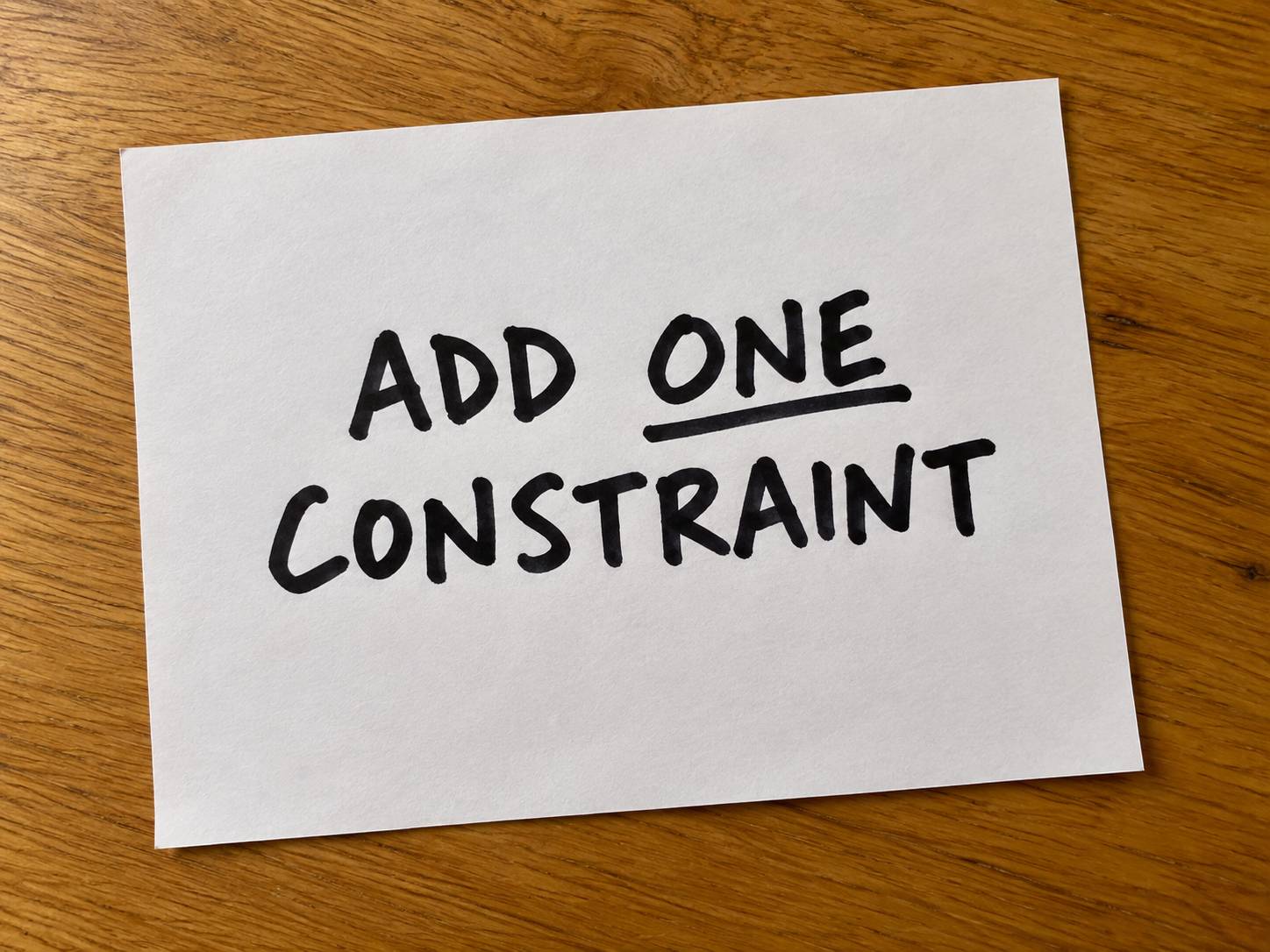
Have a look at the question on your next meeting agenda. If it's wide open, try adding one constraint: a budget, a deadline, a single year group, or the one thing you're not allowed to change. See where the conversation goes.
You can listen to the full conversation with Claire here. She also tells the story of a sustainable product day that ended with a student designing a perpetual motion machine.
If there's a wide open question sitting on your team's agenda right now, hit reply and tell me what it is. I'll try send you back a constraint or two you could try with it.
Shane
PS Claire's book is Creativity for Teachers: A Cognitive Science Approach, if you'd like to read more.
Listen to the latest episode
Click here to listen to this week's episode of my chart-topping podcast, Education Leaders